Everyday behaviour
Lifestyle Habits, Motivation and Everyday Health Behaviour
Most health routines are not lost to a single dramatic decision. They are shaped quietly, by how a day is arranged, what is nearby, how much attention is left over, and what happens after a week that did not go to plan. This page looks at how everyday behaviour tends to work, without telling anyone what their routine should contain.

Please read this first
This page is not nutritional advice, medical advice or a treatment plan, and it is not a replacement for professional nutritional or medical guidance. Decisions about food, activity, monitoring and medication should be made with an appropriately qualified healthcare professional who knows your circumstances. Nothing here should be used to change anything that has been prescribed for you.
The moving parts
Eight things that quietly shape a routine
None of these are rules. They are simply the factors people tend to describe when they talk honestly about why a routine held together in one month and came apart in another.
-
Routine
The shape of an ordinary day
Behaviour attaches itself to structure. When a day has a predictable shape, the things that need doing tend to find a place within it. When the shape changes, through travel, illness, a new job or a family event, previously effortless steps can suddenly need conscious thought again.
-
Planning
Decisions made in advance
A decision made calmly, ahead of time, asks far less of a person than the same decision made in a rush. Planning is not about rigidity. It is mostly about reducing the number of things that have to be worked out on the spot.
-
Motivation
A resource that rises and falls
Motivation is real, but it is not constant, and building a routine that only works on high-motivation days is a fragile arrangement. Many people find it more reliable to design for an average day rather than a determined one.
-
Repetition
How something becomes automatic
Repeated actions gradually require less deliberation. This is ordinary learning rather than anything mysterious, and it takes different amounts of time for different people and different behaviours.
-
Environment
Cues in the surroundings
What is visible, nearby and easy to reach has an influence that is easy to underestimate. Adjusting surroundings is often less effortful than trying to out-argue them each day.
-
Goals
Reasons that belong to the person
Goals that come from somewhere personal tend to survive difficult weeks better than goals adopted because someone else suggested them. What matters here is not ambition, but ownership.
-
Consistency
Repeatable beats impressive
A modest routine that continues generally does more than an ambitious one that stops. Consistency is a question of design as much as determination.
-
Setbacks
What happens after an off week
Interruptions are part of every long-term routine, and the response to them matters more than the interruption itself. Returning to a routine without a period of self-criticism is a skill, and one that can be practised.
A simple way to picture it
How a repeated action tends to settle in
This is a general illustration of how repetition works in everyday life. It is not a clinical model, and it is not specific to any health condition.
In practice
Small Changes and Individual Goals
Sustainable behaviour change can look different for different people. For one person it may mean attaching a single step to something already reliable in the day. For another it may mean removing an obstacle rather than adding an intention. For someone else it may mean nothing more than deciding in advance what happens on the days when the plan is not possible.
What these have in common is modesty of scale. Changes that are small enough to survive an ordinary bad day tend to stay, and things that stay have far more opportunity to matter than things that impress briefly and then stop.
None of this is a formula, and it is certainly not a promise. It is simply a more forgiving way to think about the ordinary work of a routine, and one that leaves less room for self-blame.
General reflections only. Anything relating to food, activity, monitoring or medication should be discussed with your own healthcare professional.
A hypothetical scenario
Imagine someone whose routine works well from Monday to Thursday and reliably falls apart at the weekend. The obvious conclusion is that they lack discipline on Saturdays. A more useful question is what is actually different: the day has no fixed shape, the usual prompts are absent, and every decision has to be made fresh.
Framed that way, the possible responses change. Rather than resolving to try harder, the person might give the weekend a light structure of its own, or decide in advance on a simpler version of the routine that fits an unstructured day.
This is a hypothetical scenario written to illustrate a point. It is not a real case study, it does not describe any individual, and it is not advice for any particular situation.
Where a complementary approach may fit
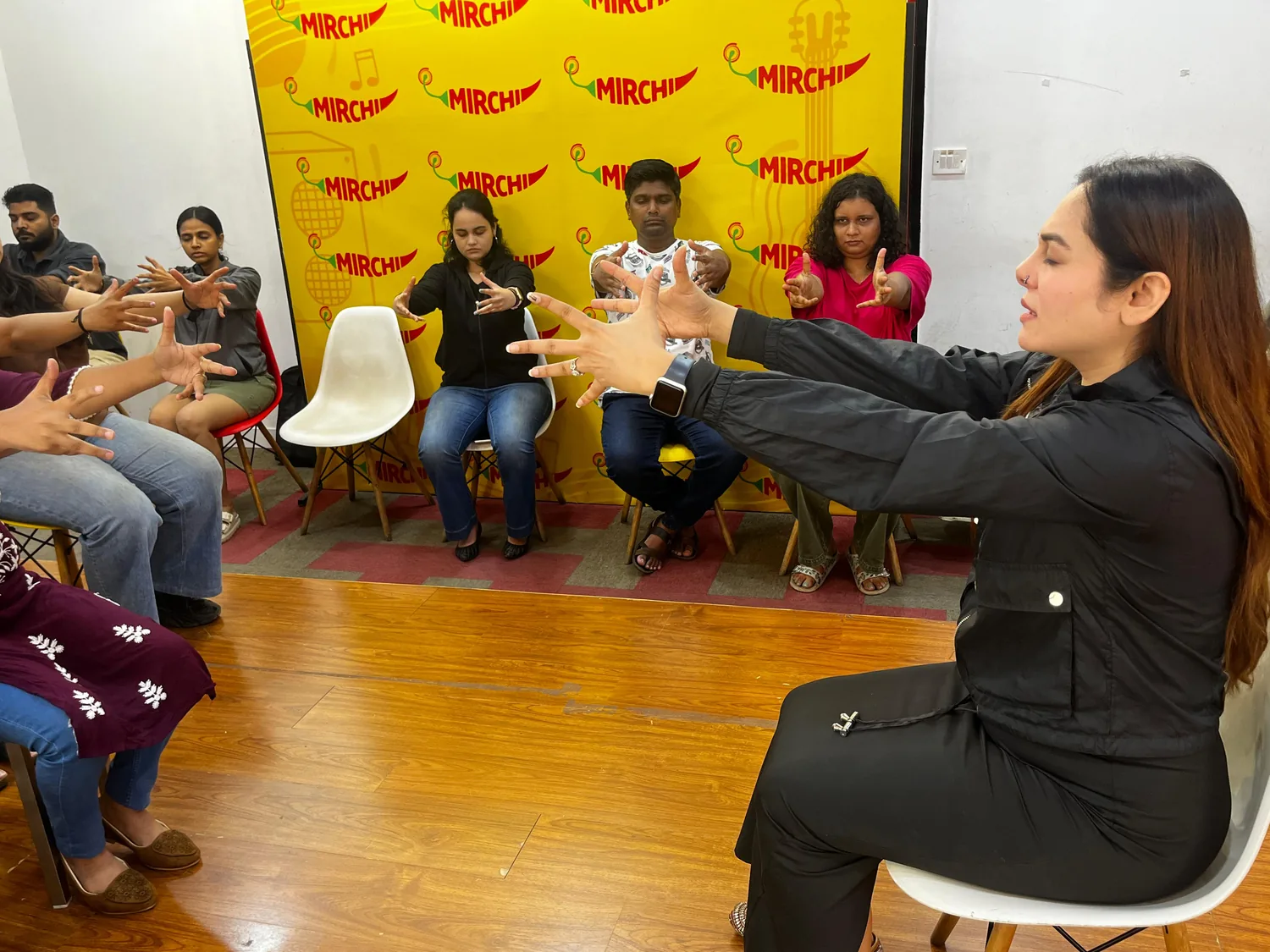
Hypnotherapy may be explored in relation to motivation and health-related habits, where appropriate
That means conversation, relaxation and focused attention directed at everyday goals a person has chosen for themselves. It does not mean influencing blood glucose, altering a treatment plan, or replacing any part of medical care. Individual experiences vary, and suitability is considered case by case.
Talk it through
Habits are personal, and so is the conversation about them
If you would like to discuss whether hypnotherapy may be a suitable complementary approach for motivation or everyday routines, you are welcome to get in touch.